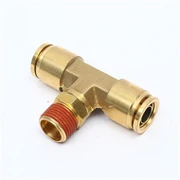
Pneumatic joints
Jan 26, 2024
Pneumatic joints are an important part of the mechanical structure. They are pipe connections that realize the transmission of air and compressed gas through pneumatic principles. The function of pneumatic joints is to connect pipes and enable the connected pipes to communicate and circulate internally, playing an important connection role. Pneumatic joints ensure the safety and stability of gas transmission through a structure with sealing performance. They can successfully connect various pipelines and have a wide range of applications.
Pneumatic joints have the following advantages:
1. High reliability: Pneumatic joints can withstand extreme conditions such as high pressure and high temperature, maintain stability in harsh environments, have a long service life, and are not prone to failure during use.
2. Wide scope of application: Pneumatic joints are suitable for many different fields, such as machinery manufacturing, aerospace, medical equipment, etc., and have a wide range of applications.
3. Good stability: Pneumatic joints can prevent gas leakage and loss, have good stability, and ensure the accuracy and stability of gas transmission.
4. Excellent performance: The pneumatic joint has good guidance and positioning, can reduce energy loss during operation, and has excellent performance.
In short, pneumatic joints are an important mechanical structural component with the advantages of good stability, high reliability, and long service life. They are an ideal choice for realizing pneumatic transmission and connecting various pipelines. We should pay attention to the quality and usage of pneumatic joints to ensure their normal operation and play a more important role in the mechanical structure.