Call Us: +8619925467112/+8615622511697Email: 15622511697@163.com
enLanguage

Mould Coupling

What Is Mould Coupling?


In most cases, a coupling does not change the direction of motion or angular velocity, unlike gears. It cannot be connected or disconnected mid-operation, unlike clutches. Couplings can only transfer torque over short distances, for longer distances chain drives and belt drives are better alternatives. Couplings are often paired with lead screw assemblies to connect the screw shaft in-line to a motor.
The coupling works by maintaining a strong but flexible connection at all times between two shafts to transfer motion from one shaft to another. It does so at all values of loads and misalignment without permitting any relative motion between the two shafts.


Advantages of Mould Coupling
 

Quick mold changeovers
Mold couplings enable fast and tool-free mold changes. This is especially useful in injection molding, where different molds may be required to produce a variety of plastic parts. The ability to quickly switch molds reduces downtime and improves overall production efficiency.


Easy maintenance
Mold couplings simplify the maintenance and cleaning of injection molding equipment. By quickly and easily disconnecting components, maintenance tasks such as cleaning, inspection, and part replacement can be performed more efficiently.


Reduce downtime
Mold coupling systems minimize the time required to connect and disconnect components during mold changes. Reduced downtime directly translates into increased production output and improved overall operational efficiency.


Enhanced flexibility
The injection molding process often involves producing different plastic parts with different shapes and sizes. Mold couplings provide the flexibility to easily accommodate these changes, allowing for a more versatile production setup.


Tool-free operation
Mold couplings typically require no additional tools to operate. This tool-free design simplifies the process of connecting and disconnecting components, making operation more convenient and efficient.


Increased safety
Mold couplings typically have safety features to prevent accidental disconnection during operation. This improves workplace safety by reducing the risk of injury and ensuring a secure connection during the injection molding process.


Compatibility
The mold coupling is designed to be compatible with a wide range of injection molding equipment and components. This compatibility allows the mold coupling system to be seamlessly integrated into an existing injection molding setup without major modifications.


Cost savings
The time saved during mold changes and maintenance, combined with increased production efficiency, can result in cost savings for manufacturers. The ability to quickly adapt to changing production requirements also contributes to a cost-effective manufacturing process.


Why Choose Us

State-of-the-art equipment

The company's products are widely used in mechanized textile industry equipment, food and medical chemical equipment, auto parts, and various automation equipment.


High-quality products

The company implements ISO9001 quality system management, through the continuous introduction of new equipment, improve technology, and adopt advanced equipment testing equipment, so as to improve the quality of our products.

Professional staff

There are about 200 people in the whole company, and the company's purpose is to do only one professional thing, which is to specialize in the production of joints.

One-stop solution

The company's products are sold at home and abroad. We are committed to solving problems for our customers, and we will be your best choice!


Types of Mould Coupling


Sleeve coupling
Sleeve coupling is the simplest type of shaft coupling, and it is used when transmitting light to medium torques. It is composed of a thick and hollow cylindrical tube called a sleeve or muff whose inner diameter is the same as the shaft. The sleeve transmits the torque across the shafts. It is attached to each end of the shaft. Keys are fitted between an individual shaft and its hub, the part wherein the shaft is fitted, to ensure the sleeve and the shafts do not slip. Lastly, the sleeve coupling has threaded inserts to prevent the shafts from moving in a longitudinal direction when bolts are inserted into them.


Split muff coupling
In split muff coupling, the sleeves or muffs consist of two or three semi-cylinders that are fastened together by bolts and nuts. Each shaft is also keyed to its hub. Split muff couplings are easy to install and maintain, and they can be dismantled without changing the positions of the shafts. The three-piece construction variant of split muff couplings maintains the original position of one shaft while adjustments are made on the other.


Flange coupling
A flange coupling is a type of shaft coupling that consists of two separate flanges that are fastened together by bolts and nuts. Similar to sleeve and split muff couplings, each shaft is keyed to its flange hub. To bring both shafts in the same centerline and maintain their alignment, one of the flanges in a flange coupling has a projected section while the other flange has a matching recessed portion.


Spline coupling
In spline couplings, the sleeve has internal teeth that match the external teeth of the spline shaft. The matching teeth prevent the shafts from slipping and being misaligned instead of using a fitted key. The load is equally distributed along the circumference.


How Can a Quick Coupling Be Installed to a Mold?

Select the right quick couplings: Choose quick couplings that are suitable for the specific requirements of your injection molding system, including size, type, and material compatibility.

Identify connection points: Determine the connection points on the mold where the quick couplings will be attached. These are usually located in areas where molten plastic needs to be injected into the mold.

Prepare the mold: Ensure that the mold is clean and free from any debris or residues that may affect the connection. Clean the connection points on the mold where the quick couplings will be attached.

Attach the male coupling: Connect the male coupling of the quick coupling to the designated connection point on the mold. This typically involves inserting the male coupling into the female receptacle on the mold and securing it in place.

Attach the female coupling: Connect the female coupling to the corresponding male coupling on the injection molding machine or hydraulic system. Ensure a secure connection to prevent leaks during operation.

Secure the couplings: Depending on the specific design of the quick couplings, there may be mechanisms such as locking rings or levers to secure the couplings in place. Follow the manufacturer's guidelines for securing the couplings.

Test the connection

Conduct a pressure test to ensure that the quick couplings are securely attached and that there are no leaks. This can be done with the system pressurized or by using a separate testing tool.

Ensure accessibility

Consider the accessibility of the quick couplings for future maintenance or mold changes. Ensure that there is enough space for easy connection and disconnection when needed.

Follow manufacturer guidelines

Always follow the specific installation instructions provided by the manufacturer of the quick couplings. Different types and brands may have slight variations in their installation processes.


Application of Mould Coupling


Power transmission
The primary purpose in most cases is power and torque transmission from a driving shaft to a driven shaft-for example, a coupling connecting a motor to a pump or a compressor.

Absorb shock and vibration
A shaft coupling can smooth out any shocks or vibrations from the driving element to the driven element. This feature reduces the wear on the components and increases the service life of the setup.

Accommodate any misalignment
Misalignments between shafts can result from initial mounting errors or may develop over time due to other reasons. Most couplings can accommodate some degree of misalignment (axial, angular and parallel) between shafts.

Interrupt heat flow
A shaft coupling can also interrupt the flow of heat between the connected shafts. If the prime mover tends to heat up during operation, the machinery on the drive side is protected from being exposed to this heat.

Overload protection
Special couplings known as Overload Safety Mechanical Coupling are designed with the intention of overload protection. On sensing an overload condition, these torque-limiting couplings sever the connection between the two shafts. They either slip or disconnect to protect sensitive machines.


Material of Mould Coupling

Steel

It is one of the most common materials for gears due to its high strength and durability. It can withstand heavy loads and high temperatures without significantly deforming. However, steel is heavier than other materials and can be subject to corrosion if not treated properly.

01

Plastic (polymers)

Offers light weight, corrosion resistance, reduced gear operating noise and low friction. They are less subject to wear than metals. However, plastics can be less resistant and durable than metals, especially under high load conditions or extreme temperatures.

02

Bronze

It is often chosen for its good wear resistance, low friction and corrosion resistance. It is particularly suitable for applications requiring good strength and durability. However, bronze is less durable than steel and may require lubrication to avoid excessive friction.

03

Aluminium

It is known for its light weight, good thermal conductivity and corrosion resistance. It is often used when weight is a critical factor. However, aluminum is generally less mechanically strong than steel and can deform under high loads.

04

Cast iron

Offers high resistance to wear and deformation, together with good vibration absorbing properties. It is particularly suitable for high load and high strength applications. However, cast iron is more brittle than steel and can be prone to fracture under sudden loads.

05


How to Maintain Mould Coupling
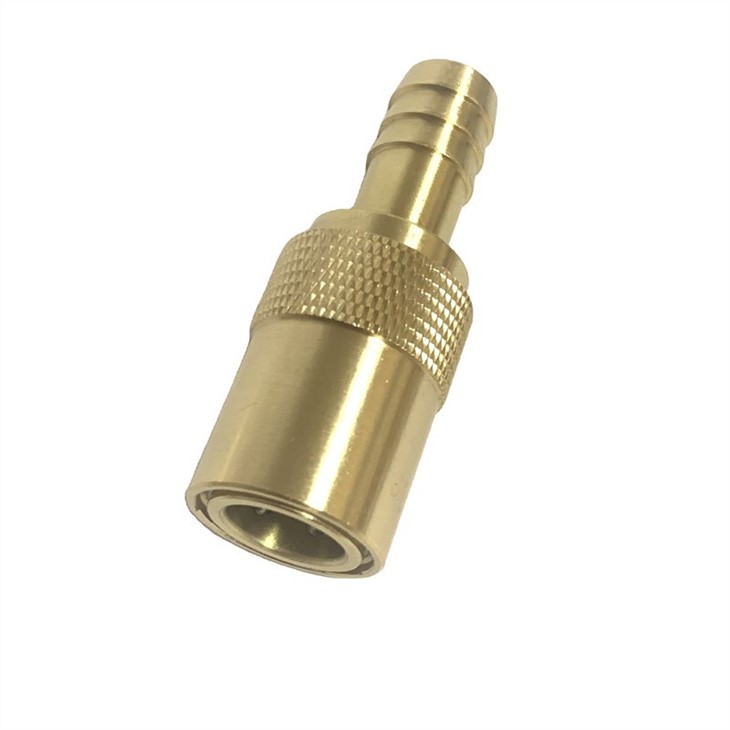
Pure Copper Mould Coupling
2
Pure Copper Quick Mould Coupling
4

Disassembling a disassembly coupling
When inspecting a disassembly coupling, you need to carefully check every crack and crevice. To do this, you need to completely or partially disassemble the entire disassembly coupling.

This will allow you to get a better look at the internal components. You need to check for wear and make sure there are no alignment issues. Check if the lubricant has hardened, as this can also cause damage to the disassembly coupling itself.


Make sure there is enough lubrication
If the disassembly coupling requires lubrication, you need to make sure that the lubrication is sufficient for optimal performance. Types of disassembly couplings that require lubrication include:

  • Body fluids
  • Gear drives
  • Chains
  • Grid joints

If the disassembly coupling is not properly lubricated, things can get complicated. Disassembly couplings require proper lubrication to function properly. Otherwise, functional issues can occur that can damage the disassembly coupling.

Additional lubrication may be required when performing maintenance inspections. Leaks can occur at any time, so you need to check to make sure there is enough fluid in the disassembly coupling.

Make sure to use the appropriate lubricant as specified by the manufacturer. Lubricants can vary by type and manufacturer.


Beware of contamination
As mentioned earlier, you must be careful when inspecting disassembly couplings. If you are not careful, contamination can occur. This is especially harmful to the disassembly coupling.

When using solvent to clean or flush the disassembly coupling, make sure it is completely removed. Otherwise, this may contaminate the equipment. Contamination can also dilute the lubricant.

If any foreign particles get into the disassembly coupling, it can also cause damage to the machine.


Replace when necessary
If you find that the disassembly coupling is worn, it may need to be replaced. Disassembly couplings are generally inexpensive, so if you think they need to be replaced, you can save time and money on expensive repairs.

If the disassembly coupling needs to be replaced, but it doesn't, it may affect other parts of the machine.


Reduce the use of the disassembly coupling
As with any machine, the less you use it, the longer it will last. But depending on your industry, this may not be an option.

Other ways to ensure that the disassembly coupling lasts longer is to observe how the equipment is operated. Emergency braking and shock loads can greatly affect the condition of the machinery.


How to Choose a Mould Coupling


Environmental requirements
It is important to analyse the area, the temperature where the coupling is going to be exposed, and also if the device is going to be in a corrosive environment or not.

Accessibility
The space might be an issue when placing the coupling. In some applications there is a limited or a difficult access to locate the coupling. Therefore, this is also another key aspect to take into consideration for the coupling selection.

Geometry requirements
The type of shafts should be checked, as well as the diameter and the length.

Coupling size
As an example; considering the access, space required, and the shaft types, we have to analyse what size would apply best to our installation from our range of products.

Misalignment requirements
The operator should check what types of misalignments should be corrected; parallel, torsional, axial, angular or lateral.

Mechanical performance requirements
The main target consists on understanding what kind of performance we want to have with our coupling; high torque, high speed, repeatability or high level of flexibility and cushioning.


Safety Precautions When Using the Mould Coupling


Do not store or use in an environment that may adversely affect the product.
Please handle with care. If the product is dropped, damage may be caused. In addition, please be careful not to sprain your waist when transporting, and be careful not to hurt your feet when working.
When installing or disassembling the product, it is easy to cause injury to the edges of the product. When working, please wear safety glasses, gloves and other protective equipment.
Please use the coupling below the tolerance of the error. If used beyond the allowable value, the product itself may be damaged or the peripheral devices may be adversely affected.
Please keep the load torque generated by continuous operation below the rated torque of the coupling. If used beyond the allowable value, the product itself may be damaged or the peripheral devices may be adversely affected.
For devices with large load fluctuations, apply adhesive to prevent screws from loosening, or increase the model of the coupling used by one size.
If there is an abnormal sound or vibration during the operation of the device, stop the operation immediately and check for errors, interference with peripheral devices, and loosening of screws.
Do not use screws (hexagon stop screws or hexagon socket bolts) that are not specified by our company.
When disposing of products, please entrust a professional to dispose of them to avoid environmental impact.
Do not touch the product that has just stopped functioning. Products that have just stopped operation will be exposed to high temperatures due to heat transfer from surrounding units, which may cause burns.
The data contained in the technical data is for reference only and is not a guaranteed value. Please test it in advance under the same conditions of use as the actual situation.
After installing the coupling, perform a load test for about 10 minutes before continuous operation to confirm the tightening of the screws in each part.


FAQ


Q: What is a mould coupling?

A: A mould coupling is a type of coupling used in injection molding machines to connect the mold to the machine's nozzle for the transfer of molten material.

Q: What are the common types of mould couplings?

A: Common types of mould couplings include bolted couplings, quick-release couplings, hydraulic couplings, and magnetic couplings.

Q: What materials are mould couplings typically made from?

A: Mould couplings are often made from materials like steel, aluminum, brass, or stainless steel to ensure durability and resistance to high temperatures and pressures.

Q: What are the key functions of mould couplings in injection molding?

A: Mould couplings facilitate the quick and secure connection of the mold to the injection molding machine, allow for material flow control, and help prevent leaks during the molding process.

Q: In what industries are mould couplings commonly used?

A: Mould couplings are widely used in industries such as automotive, aerospace, electronics, medical devices, and consumer goods manufacturing.

Q: Can mould couplings handle high temperatures and pressures?

A: Yes, mould couplings are designed to withstand high temperatures and pressures commonly encountered in injection molding processes.

Q: Are there specialized mould couplings for specific types of molds?

A: Yes, there are specialized mould couplings designed for different types of molds, such as hot runner molds, cold runner molds, multi-cavity molds, and stack molds.

Q: How do you choose the right mould coupling for a specific injection molding application?

A: Consider factors like mold size, material compatibility, temperature requirements, pressure ratings, and ease of installation when selecting a mould coupling for a specific application.

Q: Are mould couplings reusable?

A: Many mould couplings are reusable and can be disconnected and reconnected multiple times during the injection molding process.

Q: Can mould couplings be used with different types of injection molding machines?

A: Mould couplings are available in various configurations to be compatible with different types and brands of injection molding machines, providing versatility in machine selection.

Q: What safety considerations should be taken when using mould couplings?

A: Follow manufacturer guidelines for installation, ensure proper alignment and connection of the mould coupling, regularly inspect for wear or damage, and use appropriate personal protective equipment when working with injection molding machines.

Q: Can mould couplings be used in automated injection molding systems?

A: Yes, mould couplings can be integrated into automated injection molding systems to facilitate quick mold changes and improve production efficiency.

Q: How do you ensure a proper seal with mould couplings?

A: Proper installation techniques, such as applying the correct torque, ensuring clean surfaces, and using compatible sealing materials, are essential for achieving a proper seal with mould couplings.

Q: Can mould couplings be customized for specific injection molding applications?

A: Some manufacturers offer customization options for mould couplings to meet specific requirements, such as unique sizes, configurations, or material specifications.

Q: Are there environmentally friendly mould coupling options available?

A: Some mould couplings are made from environmentally friendly materials or designed for minimal environmental impact, promoting sustainability in injection molding processes.

Q: What maintenance is required for mould couplings?

A: Regular inspection for wear, corrosion, or leaks, lubrication of moving parts if necessary, and replacement of damaged components are typical maintenance tasks for mould couplings to ensure smooth operation.

Q: Can mould couplings accommodate different sizes and types of molds?

A: Mould couplings are available in various sizes and configurations to accommodate different mold sizes, shapes, and types, providing flexibility in injection molding applications.

Q: What are the temperature and pressure limitations of mould couplings?

A: Mould couplings are rated for specific temperature and pressure ranges, and it is important to select couplings that meet the requirements of the injection molding process to ensure safe and efficient operation.

Q: How do you disconnect the mold from the injection molding machine using mould couplings?

A: Depending on the type of mould coupling, you may need to release locking mechanisms, unscrew bolts, or use quick-release mechanisms to disconnect the mold from the machine safely.

Q: Can mould couplings improve the efficiency of injection molding processes?

A: Yes, efficient and reliable mould couplings can help reduce downtime during mold changes, improve production efficiency, and enhance overall productivity in injection molding operations.

(0/10)

clearall